Few things shape society as strongly as war.
Military conflicts come to define generations, and everyone is affected by them – whether directly as a soldier or officer, or indirectly as a protestor, factory worker or a relative supporting their loved ones from home.
Violence and tragedy cause irreparable physical and emotional damage, friends and loved ones are lost and lives are forever changed. War is hell, both for those in it and for those who are left only to imagine what the people they love and care for are going through.
Conflict begets conflict, and for many the war is only the beginning. For soldiers returning from overseas or friends and relatives coping with tragedy, moving on can be incredibly hard, and having someone to help provide support can make all the difference in the world.
The goal of Student Veterans of America at Eastern Michigan University is to help provide that support for anyone at EMU who has been affected by war.
The word “veterans” tends to immediately conjure images of the World War II generation, but the reality is that an ever-growing population of veterans – roughly 1.9 million according to the US Census – are under the age of 35.
Upon returning home they face the same problems as anyone else their age: finding a job, worrying about money and relationships and going to college, among others. On top of all that, many are still psychologically affected by their experiences, which can manifest as posttraumatic stress disorder, an anxiety disorder which can be incredibly disruptive to everyday life.
Since 1999, the number of veterans receiving compensation for PTSD has risen nearly 121 percent, due to the wars on Iraq and Afghanistan.
To curb this increase, the group is trying to serve as a network to help veterans make the transition from soldier to student. All EMU students who are veterans of any branch of the military are welcome to join the Student Veterans of America. The group also welcomes all family members and other individuals who support veteran issues to attend their meetings.
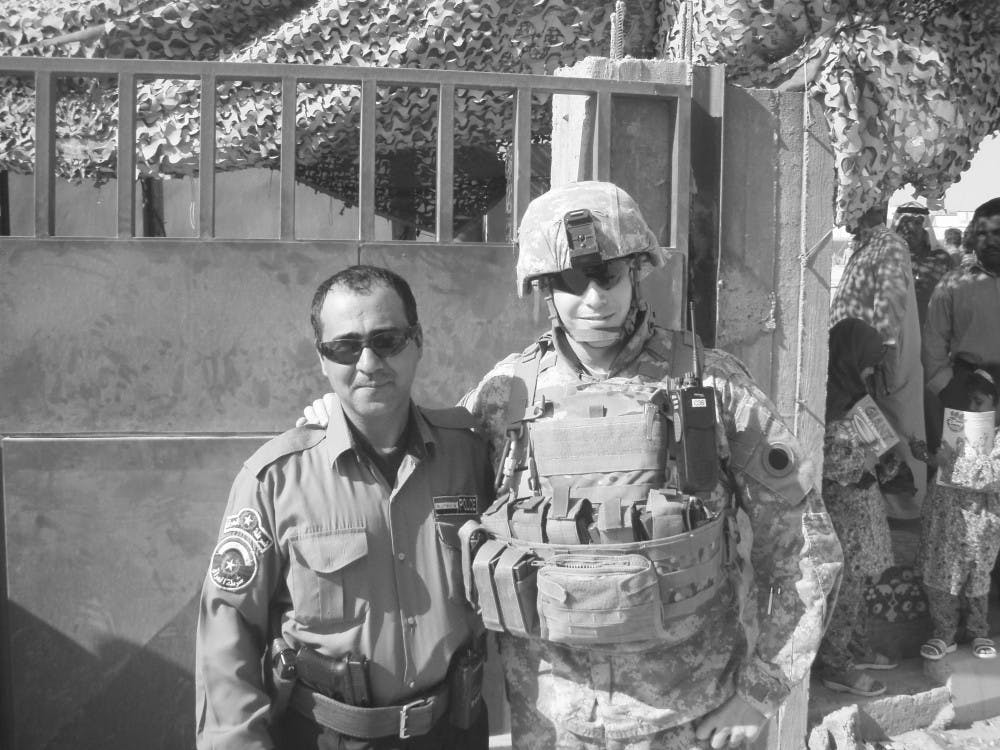
EMU’s SVA started when First Lieutenant Adam Betz, now the group’s president, came to the Veteran Services Office at EMU in February of this year. He had just returned from his third deployment in Iraq in December and asked EMU Veteran Services director Shaftone Dunklin if anyone had shown any interest in forming a group. A month later they held their first meeting.
At first, the group was just Betz and a few others. But they quickly expanded when Betz and vice president Adam Dreher began actively recruiting on campus.
“We just started looking for guys on campus or anybody on campus that were veterans,” Betz explained.
“Really we just started stopping people that were walking around. Some of the guys had their military boots on; some of the guys had the military backpacks. We just stopped and said, ‘Hey, are you a veteran?’”
In only a few months the group grew to almost 50 members and increased their presence on campus with the creation of the new Student Veterans Office, located on the second floor of McKenny Hall.
According to Betz, the response from the university has been very positive. Several faculty members, including Provost Jack Kay and Vice President of Student Affairs Bernice Lindke, have been instrumental in helping the group get off the ground.
“They are really trying to bring more veterans in, make it a more veteran-friendly campus, as we call it,” he said.
“And really all that is, is people who just care and are really trying to understand veterans – student veterans – you know, young people who went to Iraq and Afghanistan and want to come off the battlefield and readjust back to the classroom.”
The group helps new students with registration, assists them once classes start and serves as a support network for all veterans on campus.
“You’re talking about weeks since these people have been in Iraq and Afghanistan,” Betz said. “And now you’re in the registration office standing in line and, you know, it’s nerve racking.”
In addition to providing services to student veterans, the group aims to educate the campus on issues pertaining to veterans. The more aware the campus community is of the realities of war and its effect on veterans, the more accepting and welcoming they will become.
“Sometimes on college campuses it’s often the people who have never been there that are hurt the most,” Betz explained. “The anti-war movement is what comes to mind. You know, a lot of these people have never been there.”
“The campus community should know that we’re not just over there to kill enemies of the United States. We’re over there to help people, to help innocent people and rebuild these countries. I don’t think that story is told enough.”
Because war is so polarizing, the role of the soldier during wartime is often obscured by the politics surrounding the war. This was especially true following Vietnam, when returning veterans were met with anger, frustration or indifference.
For most soldiers, the political nature of war is rather inconsequential. The fact that the wars are unpopular and controversial does not change the experiences and sacrifices of the veterans. For them, the war has a personal side which is hard for those who haven’t experienced it firsthand to understand.
But as Betz explained, educating the community and raising awareness to the issues affecting student veterans is one of the group’s main goals. Their first big public event is “Invisible Wounds,” a panel discussion on PTSD, which is being held tomorrow from 3:30 – 5 p.m. in Student Center Room 352.
Like many disorders, PTSD can be hard to identify and even harder to understand. This panel will provide some background on the disorder, including how to tell if someone might have it and ways to help them deal with it. The panel will be followed by a question-and-answer session.
PTSD is a serious problem which has contributed to a high rate of suicides among young veterans returning from Iraq and Afghanistan, unfortunately including a few from Betz’s unit which returned this past December.
“A lot of these guys are college students, so you see this stuff happening on college campuses and instead of just ignoring it the college campuses need to become involved in it, they need to help out,” Betz said.
Getting involved with the Student Veterans of America at EMU is easy. Anyone interested can contact First Lieutenant Betz at SVAEMU@gmail.com, call him directly at 734-780-1040 or stop in at the Student Veterans Office in McKenny. The group’s next meeting is on Oct. 2 at 4 p.m., a location has yet to be determined.