When Eastern Michigan University students turn on the radio, one station in particular may stand out to them — WEMU 89.1, a public Ypsilanti radio station owned by EMU.
Board of Regents recognition and move to Halle Library
WEMU has been providing listeners with jazz and blues music, news, local updates and more for over 60 years. On Oct. 23, 2025, it was recognized by the EMU Board of Regents for its 60th anniversary. The Michigan Association of Broadcasters has also voted WEMU Station of the Year in its group the last three years in a row as well as in 2015 and 2017.
"That recognition is great," said WEMU general manager Mary Motherwell, who goes by Molly. "When you consider how much competition we have — [other stations] are all bigger, they're all stronger signals ... that we manage to thrive in that atmosphere, says a lot about the people here."
"We're short on a lot of things, [but] we're never short on passion or personality," Motherwell added.
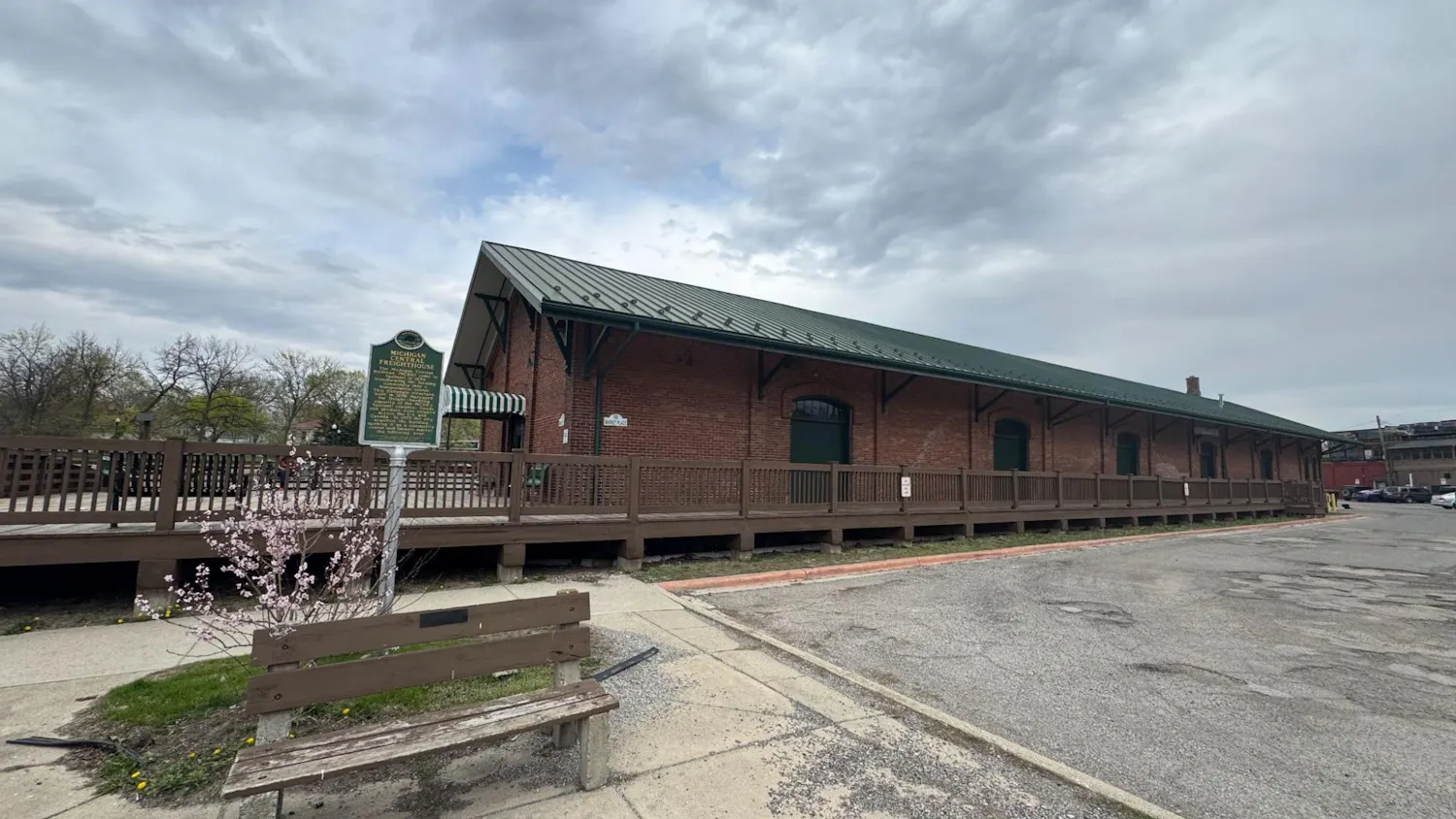
In January 2026, the WEMU headquarters will be moving from its current location in King Hall, a former dormitory building constructed in 1939, to the ground floor of the Halle Library. The new location will provide modernized options for technology and more opportunities to do public-facing events, Motherwell said.
"The technological infrastructure of this building cannot really support 21st century broadcast technology," Motherwell said. "There is more room for satellite transmissions over there [by Halle], and the building was wired in this century, not in the 1970s."
"It's just going to give us more ability to do outward-facing [events]," she added. "We can bring more people into the studio, we can do more interviews, we can do more group conversations. ... There are ways we can engage with the public more in a more modern facility that we really can't do here."
The new location will also be more conducive to a collaborative workflow, Motherwell said. Since King was previously a dorm, it has long, slender hallways, and former dorm rooms function as offices. That organization separates staff members and can make communication more difficult. By contrast, in the library, staff members will be able to all be in one spot.
"We feel great about it [the move]," Motherwell said.
Challenges since loss of federal funding
At the same time, it has been a challenge for WEMU to continue its operations with the loss of federal funding for public radio stations. An Oct. 9 update from the website for the Corporation for Public Broadcasting explains that in July 2025, the CPB was defunded, and no new funding has been available as of Oct. 1.
"A lot has changed, and we're still sorting out so much," Motherwell said. "The public response has been overwhelmingly supportive; our fundraising right now is going great. ... But you can't bank on that. Sooner or later, this issue is going to fade, and with things like SNAP and house insurance and everything, people are going to have a lot of places to put their discretionary income."
Motherwell also explained that, in addition to providing federal grants for public media, the CPB also managed the music broadcast rights system. When the CPB was defunded, stations that play a great deal of music, such as WEMU, were concerned about how they would pay for music rights and negotiate contracts.
"Fortunately, CPB had some reserve funds, and since this legislation happened, they have been working with the labels. And we learned just earlier this month that they have managed to pay those contracts through 2027," Motherwell said. "We have a little grace period where, as an industry, we will be figuring [things] out."
Nevertheless, there is still a great deal of uncertainty, and radio stations are having to adapt to a new situation. Motherwell said that while the legislation was designed to hurt PBS and NPR, it has ended up hurting stations instead, and she expressed concern not only for WEMU but also for small stations in more remote or rural areas.
"71% of the federal appropriation went directly to stations, and there are some stations in rural areas, especially places like Alaska ... that that's almost 100% of their budget. Those stations are going to have to shut down because they don't have other means of income or revenue, and often, they're the only news source in their area," Motherwell said.
Furthermore, Motherwell explained, in addition to providing music and news, radio stations are often a source of critical safety updates. These radio updates are especially essential in areas where broadband and satellite radio may not be possible.
"The other thing that was managed through all of this was the Public Radio Satellite System, which is the emergency alert system," she said. "That's all managed through public media ... and WEMU is the primary emergency alert station for two counties, Washtenaw and Lenawee. And so, when Alaska just had that tsunami a few months ago, those public stations were the only ones staying on top of it and letting people know of the danger because there's nothing else there."
What the community can do
One way that the community can support WEMU is to donate to the station. Anyone can donate on the station's website, over the phone or by mail. To donate over the phone, call 734-487-2229, and to make a gift by mail, mail a check to P.O. Box 980350 in Ypsilanti.
Another way the community can support WEMU is to simply tune in, Motherwell said.
"I think a lot of people on this campus may not recognize WEMU's position in the community," she said. "There's still a lot of people who think we're a student station, which we are not. Tune in, listen, understand how we serve Washtenaw County. There's a lot of public radio here ... but only one [station], and that's us, is hyper local to this area, and it serves only Washtenaw County."
Motherwell added that spreading the word about WEMU to those on and off EMU's campus is also a great way to support the station.
To learn more about WEMU, visit the station's website at www.wemu.org.
Editor's note: On Dec. 16, 2025, this article was updated to correct the year of King Hall's construction.