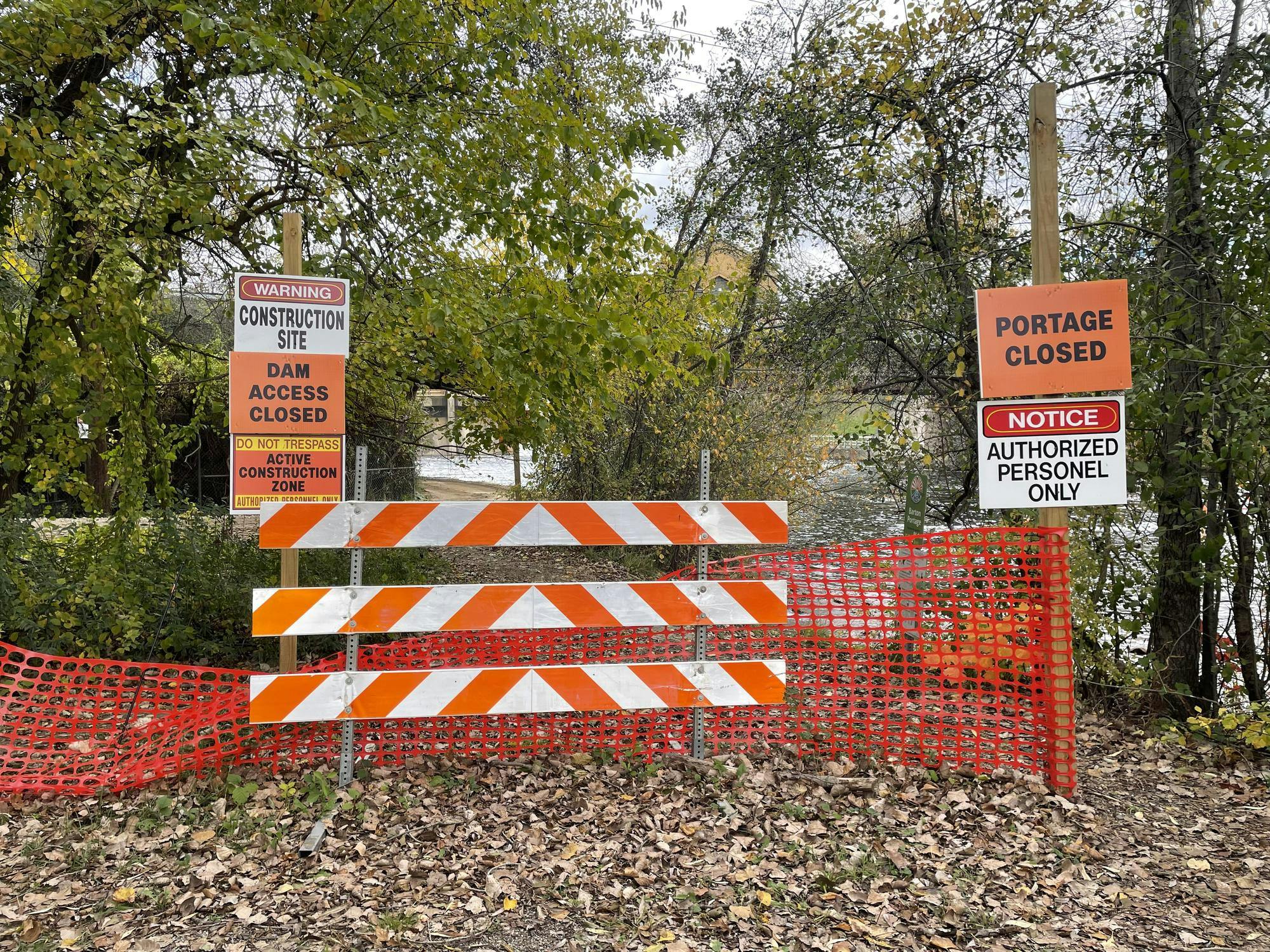
Spanning 130 miles, the Huron River contains 19 major dams along its main stem. Out of seven dams built in Washtenaw County, six of them were constructed in the early- to mid-20th century for the purpose of providing hydroelectric power for the growing industries along the river, which flows south from its headwaters at Big Lake, near Pontiac, Michigan, to dump into Lake Erie.
Three of those dams have since been decommissioned and sit dormant, their reservoirs serving as recreational areas. The other three still operate at a diminished capacity. Including Washtenaw, the river’s drainage area reaches into seven Michigan counties; the others are Oakland, Livingston, Ingham, Jackson, Wayne and Monroe.
After decades of use, the dams have altered the environment of the river. A report from the Huron River Watershed Council explained, "Although dams can provide some benefits, dams produce severe negative impacts on the rivers they harness. Dams alter a river’s chemical, physical, and biological processes."
After spending three decades collecting data on the ecological impact of those dams, the council has adopted plans and raised money to remove the structures. The council cites sediment buildup that blocks the flow of nutrients, the disruption of natural fish movement and the dissolving of oxygen levels as major issues causing harm.
Here are the six hydroelectric dams in Washtenaw County, their history, their current use and respective cities' plans for the future.
Peninsular Paper Dam
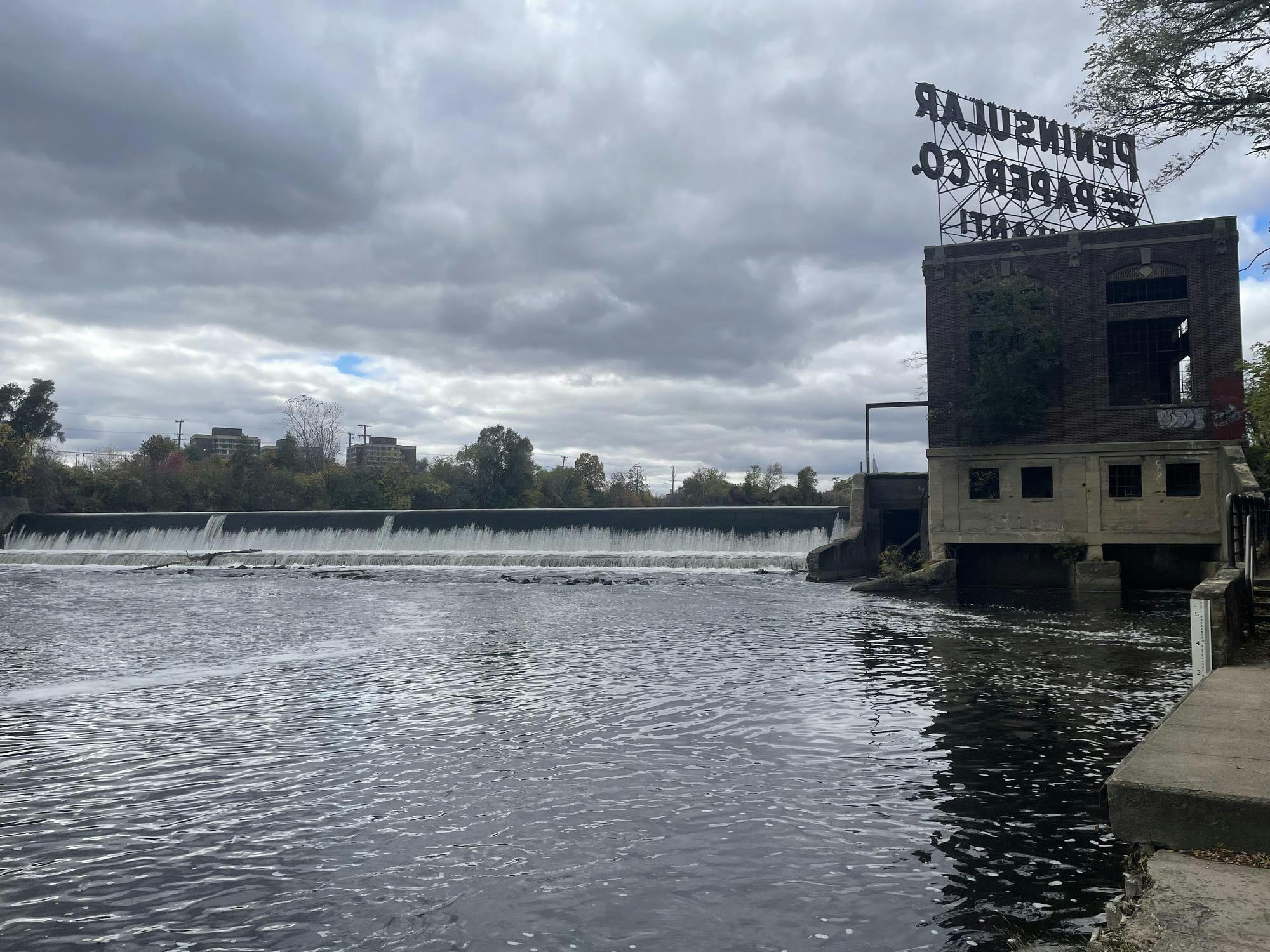
Originally constructed in 1867 and rebuilt in 1914, the Peninsular Paper Dam is the oldest on this list. The dam provided hydroelectric power for the Peninsular Paper Mill until 1970. In 2004, the south side of the paper mill was demolished by the city and replaced by the Peninsular Place apartment complex. The building on the north side of the dam remains standing as one of Ypsilanti's oldest industrial landmarks.
Since 2018, the Huron River Watershed Council and the City of Ypsilanti have been working in tandem to secure funding for the removal of the Peninsular Paper Dam. The Watershed Council cites multiple reasons for the dam's removal, including its failure to meet safety standards, negative impact on the health of fish and wildlife, and potential flood risks.
In December 2024, the City of Ypsilanti announced that the project to remove the dam had reached sufficient funding following a $7.5 million grant from the National Fish and Wildlife Association. A blog post written by Watershed Council Member Daniel Brown stated, "We currently anticipate that work will begin in the fall of 2025 and be completed in the fall of 2026." However, no work on the dam's removal has begun.
Superior Dam
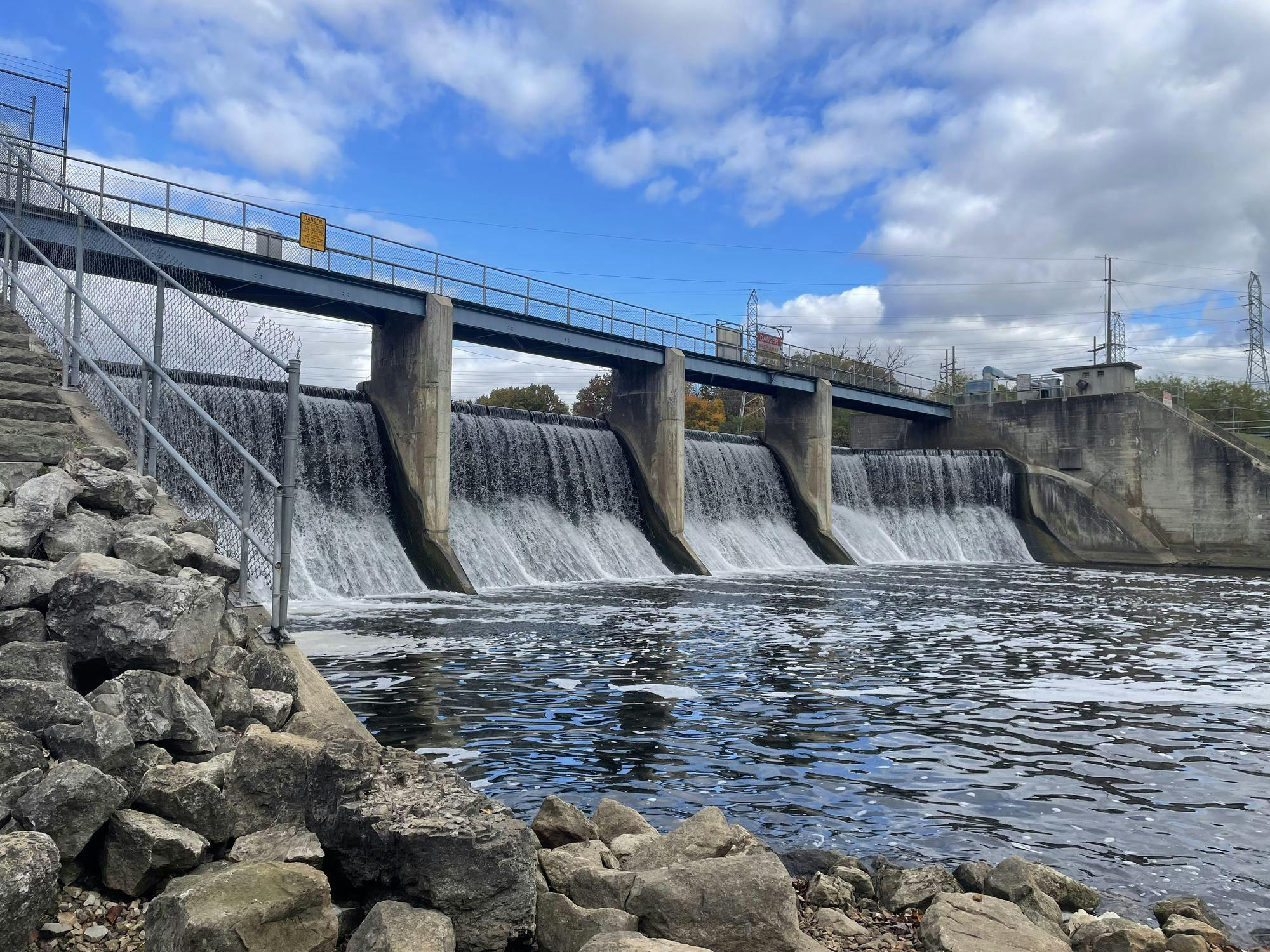
The Superior Dam, built in southwest Superior Township, Michigan, in 1920, generates electricity for the city of Ann Arbor, Michigan.
The Superior Dam was constructed in 1920 to generate power for the Superior Station Hydroelectric Plant located at the end of First Street off Superior Road in Superior Township. The dam continues to operate, generating an estimated 1,800 megawatt-hours of electricity annually for the city of Ann Arbor.
However, a 2019 report by the Huron River Watershed Council stated that the dam "does not generate enough electricity to cover its own annual maintenance and operating costs" and that the city is considering its removal.
The Superior Dam is the only one on this list that does not have its own park or paved trail. Instead, it is accessible to the public only by unmarked foot trails that cut through the woods behind the Trinity Health Ann Arbor Hospital on McAuley Drive, off West Clark Road. The paths lead to a canoe and kayak launch area at the base of the dam. The dam's catwalk is closed to the public.
Dixboro Dam
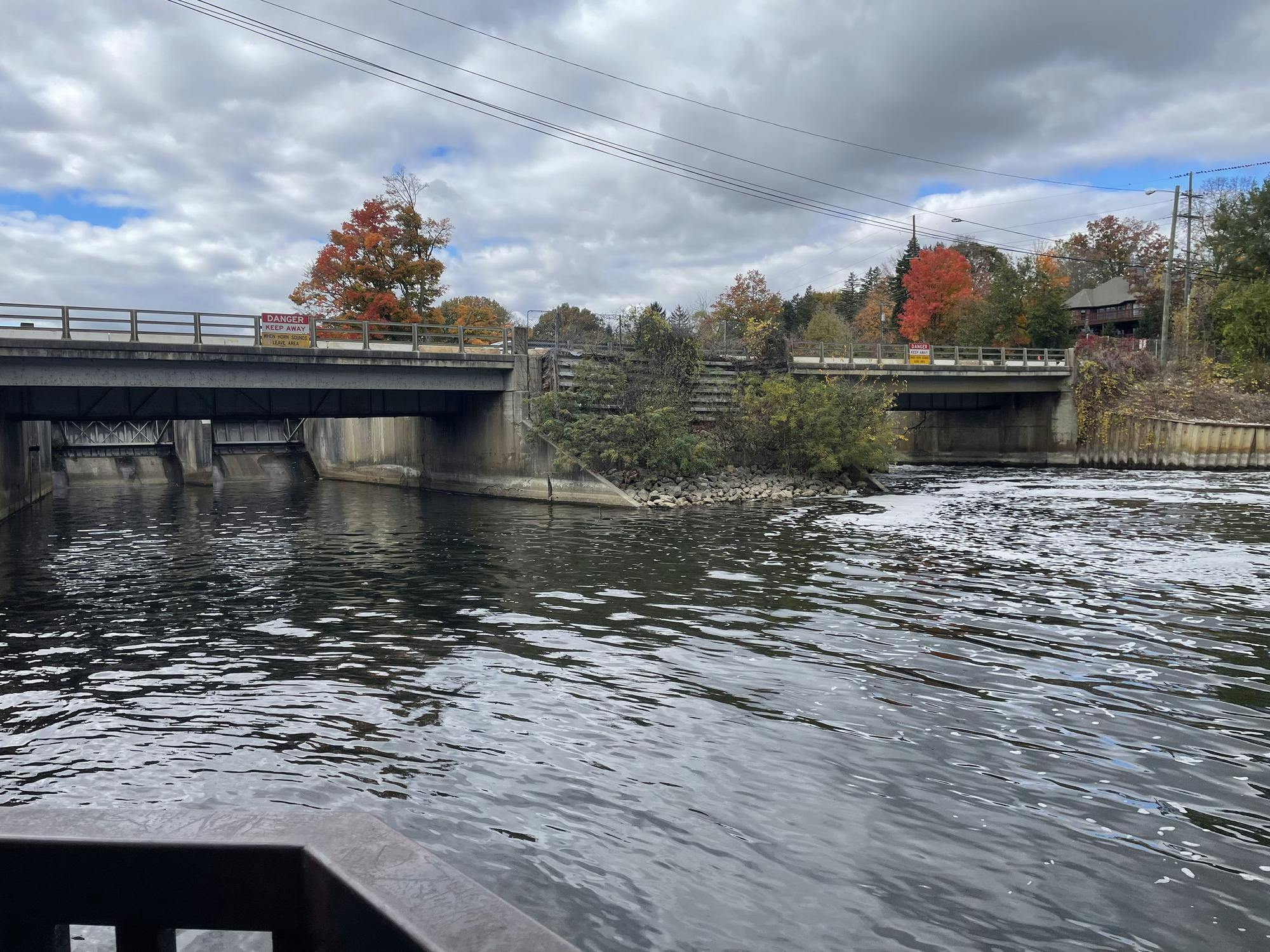
Located at the end of Old Dixboro Road, the Dixboro Dam, also known as Geddes Dam, is a hydroelectric dam built by the Detroit Edison Co. that operated from 1919-1959.
Now decommissioned, the dam sits in the middle of Gallup Park, where visitors use its reservoir recreationally.
Ford Lake Dam
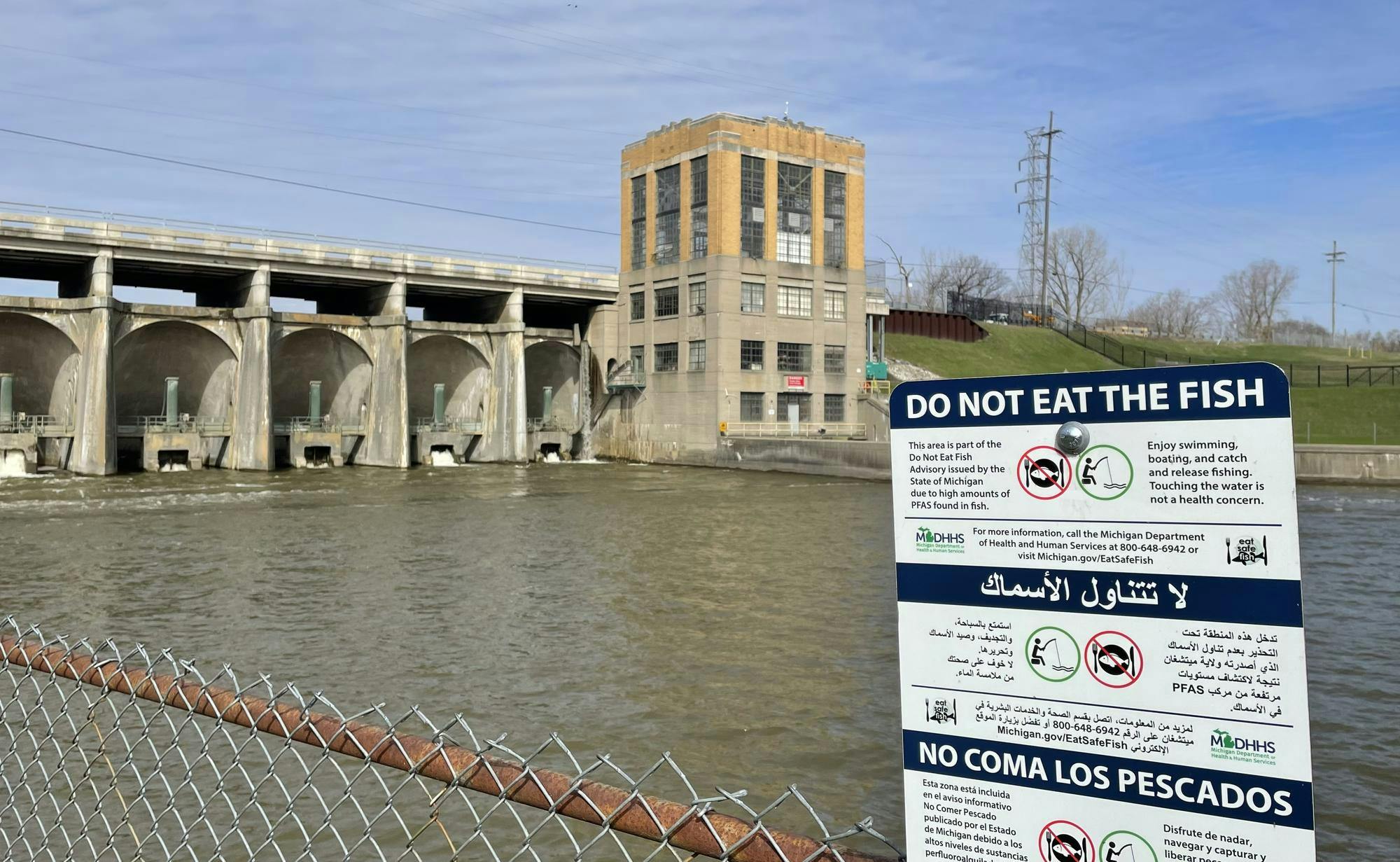
Towering at 45 feet, the Ford Lake Dam comes in as the tallest on this list. It was built by the Ford Motor Co. in 1931 to provide hydroelectric power for the Ypsilanti Ford Motor Plant. In 1969, it was given to Ypsilanti Township and has since been used to generate electricity for DTE.
The dam's construction created Ford Lake, which is the largest reservoir on this list. The lake is used by residents for swimming, fishing, boating and other recreational activities.
Ford Lake has a history of harmful algae blooms, which are spikes in algae growth that can cause harm to lakes and their fish due to the release of a toxin known as microcystin. The Washtenaw County Health Department released a health advisory in fall 2024 notifying residents of a particularly dangerous bloom that was occurring in the lake at that time. These blooms make the water harmful for skin contact and ingestion. They also render the lake's fish inedible. Many signs are placed around the lake advising visitors not to eat the fish.
Argo Dam
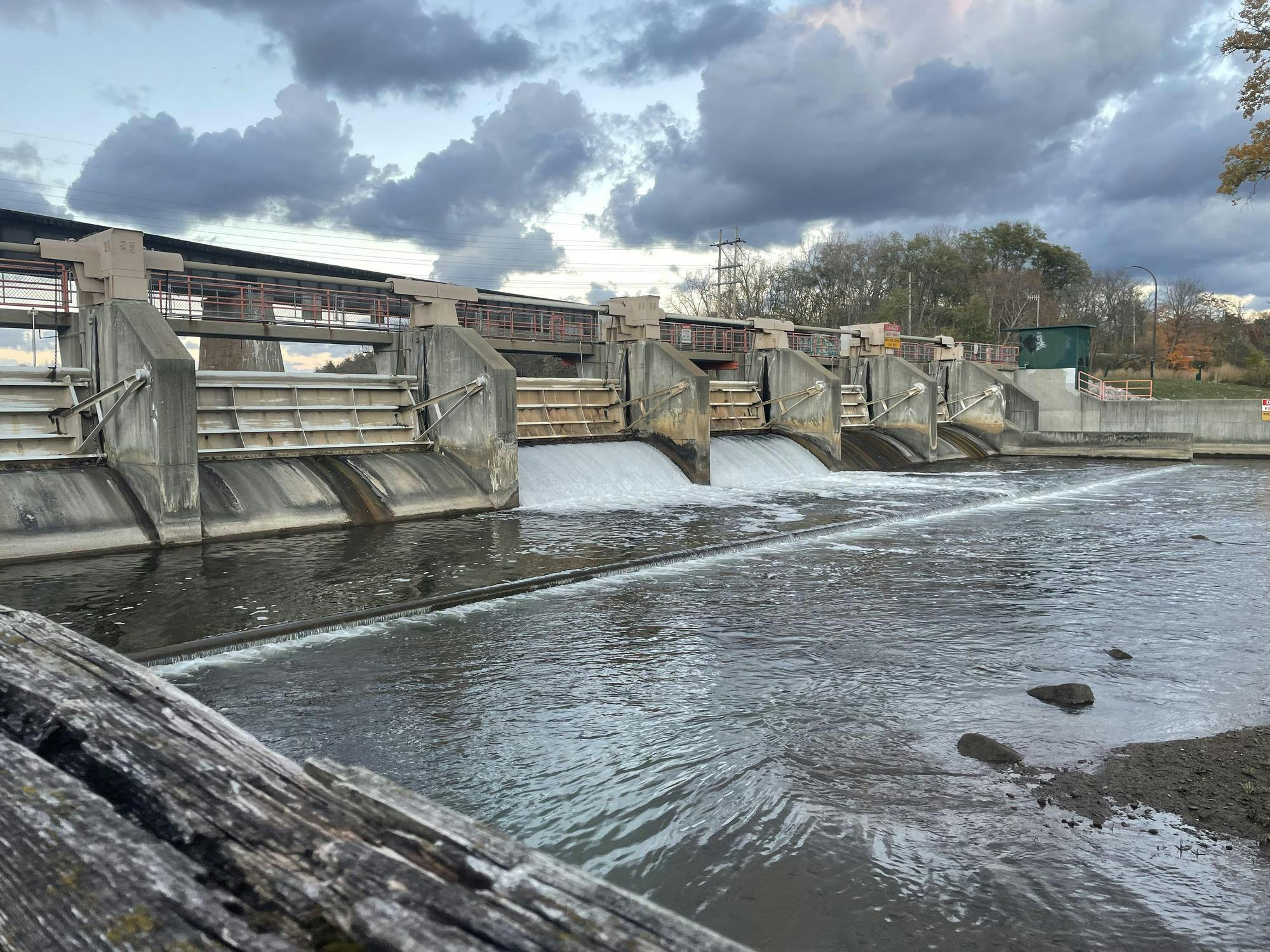
The Argo Dam, on the Huron River north of downtown Ann Arbor is part of Washtenaw's County's Border to Border Trail. Visible from the trail, the dam is a decommissioned hydroelectric structure.
As part of the same project as the Geddes Dam, the Argo Dam was built in 1920 by the Detroit Edison Co. and ceased power generation in 1959. The dam was purchased in 1963 by the City of Ann Arbor and rebuilt in 1972.
Located just north of North Main and Depot Street in Ann Arbor, the Argo Dam now serves as a recreational area. The dam's catwalk is part of the Washtenaw County Border to Border Trail. The reservoir is used for canoeing and kayaking.
Since 2007, the Huron River Watershed Council and the Michigan Department of Natural Resources have advocated for removal of the Argo Dam. The council has cited unusual water temperatures, poor oxygen levels, fish quality and the presence of invasive species as reasons for removal. In 2010, after receiving pushback from the City of Ann Arbor, the Department of Natural Resources dropped the project to remove the dam, and it has remained standing ever since.
Barton Dam
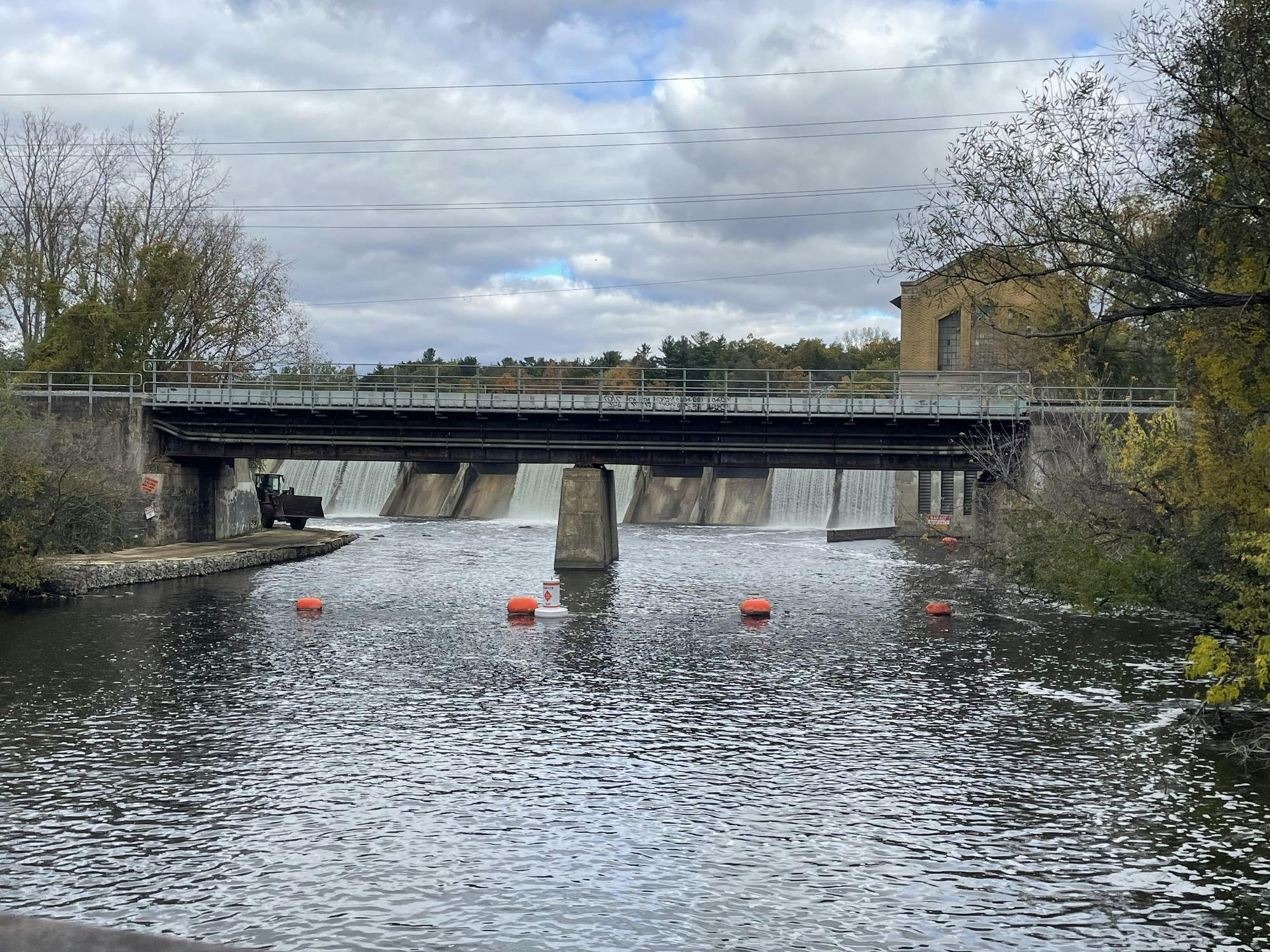
The Barton Dam is a still operational hydroelectric dam in Ann Arbor. It was built in 1912 as part of the Barton Dam Hydroelectric Station and generated power for the Detroit Edison Co. until it was decommissioned in 1963.
The City of Ann Arbor bought the dam and reopened it for power generation in 1988. The dam currently generates about 4,200 megawatt-hours annually for Ann Arbor, making it profitable for the city, unlike the Superior Dam.
The dam can be accessed by the Barton Nature Area trail, which crosses over the bridge and leads along the perimeter of Barton Pond, the dam's reservoir.
Since March 2025, the dam trail and portages have been closed to the public as the dam undergoes construction to improve stability. The project is scheduled for completion in 2027.