Why don’t we care about our society any more?
Other countries care about their societies and their unique culture, but we in the US don’t seem to care about ours. Why not?
I like Oliver Stone’s movies, but do I like them so much I’d offer the famed director of “Platoon,” “Natural Born Killers” and “Any Given Sunday” $10 million from the public treasury?
A sense of self-loathing, shame, unattractiveness and low self-esteem can happen as early as elementary school, especially for young girls. The cause for this type of anguish isn’t always bullying or being left out of a clique. The sources of body image issues vary, but there is one that gets the biggest amount of blame.
Recent events are causing me to question whether we are living in the 21st century or the Middle Ages. From Michigan’s newly instated “rape insurance” policy to the “backlog of 11,000 untested rape kits” in Detroit as reported by MSNBC, the historical pattern in which women pay the price for events outside of their control continues.
What city with no money can afford to give it away? Ypsilanti apparently can.
Should the United States rule the world through economic and military might? Or should we lead by creating a new economic and social model where true equality and democracy exist alongside justice and environmental stability?
“You take a look at the weak economy, the overregulation….what we are seeing here is big government in practice,” said Rep. Paul Ryan of Wisconsin, the Republican nominee for vice president in 2012. Such complaints about an overbearing government are abstractions and are difficult to debate and discuss – unlike real instances where clearly the rules on persons and businesses are burdensome.
Smiles are contagious, or at least those are the results of a study conducted in Sweden at Uppsala University. Yale Scientific Magazine reports, “They found that genuine smiles directly induced smiles from the participants.”
Economists divide income distribution into quintiles. This sterile terminology doesn’t capture the romanticism of “rags to riches,” but the American dream is about people who want to move into a quintile above the one they were born into.
When I was a kid, getting those dreaded vaccinations was a rite of passage, like a bar mitzvah or quinceañera if you replaced all the dancing and food with needles. Everyone went through it – it was just a part of growing up. But according to a U.S. News article published in 2012, fewer and fewer children are receiving those shots, as the number of parents who opted their kids out of the required vaccines rose between the years of 2005 and 2012.
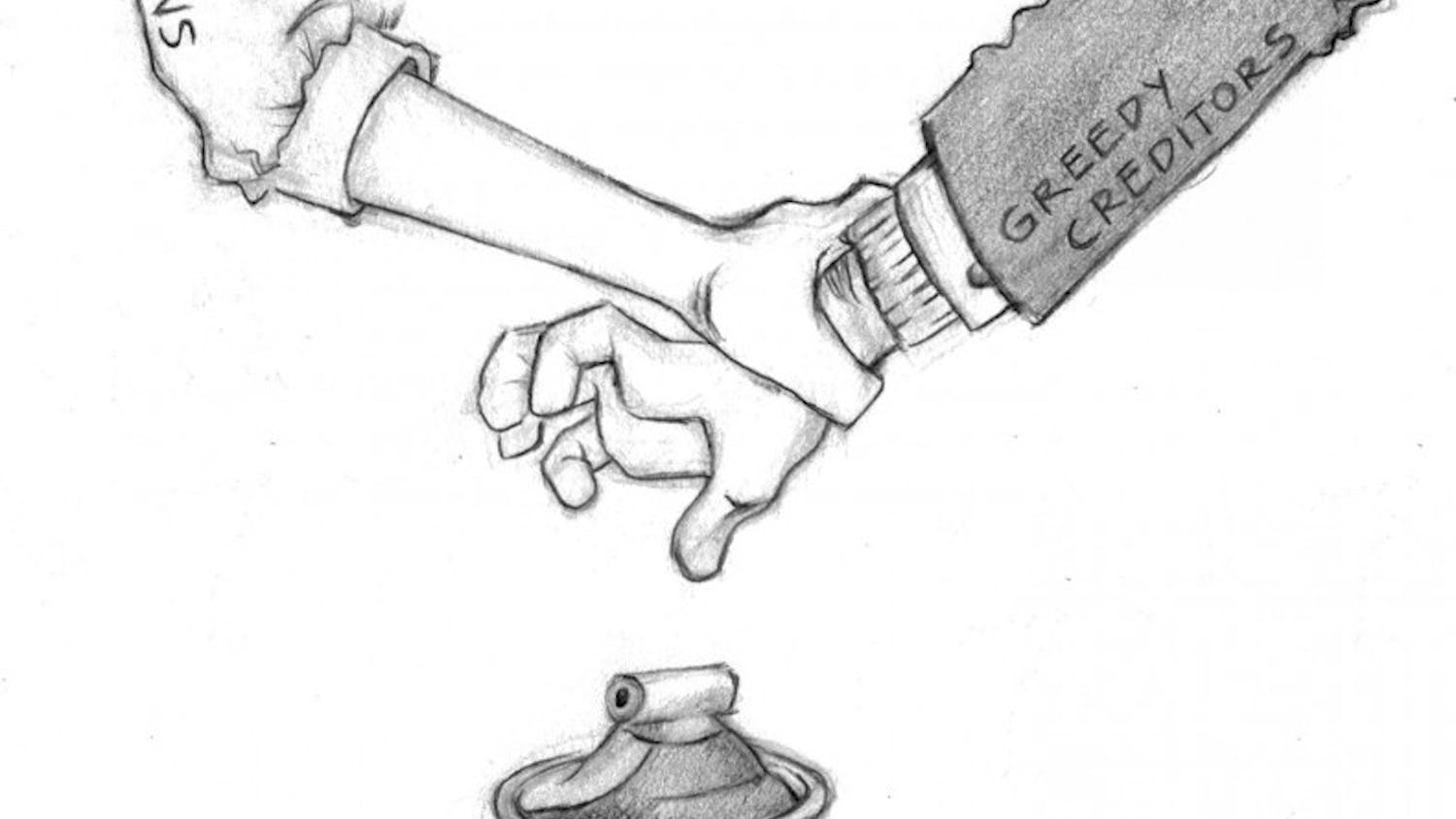
It’s already been written that the city of Ypsilanti will not declare bankruptcy, at least not in the foreseeable future. That does not mean there are not lessons to be learned from other localities that have sunk into insolvency.
One of the most common questions that a 5-year-old is asked is, “What do you want to be when you grow up?” In order to answer such a question, a 5-year-old needs time to think and consider their options, so probably about 10 or 30 seconds. The answer is always impulsive – they usually say the first thing that comes to mind. Their favorite person, their favorite cartoon character or their latest obsession could influence their answer. Whatever the answer is, it is quick, decisive and they are absolutely confident in it.
For 225 years, the citizens of the United States have elected one person to serve as their president – one person to serve as commander-in-chief of the armed forces, and to serve as the chief executive. Considering the amount of power that someone in this position holds, the United States would be better served by electing a federal council with seats divided up between political parties based on popularity in the voting booth similar to the system used in Switzerland.
While we were away on winter recess, some more pieces of democracy have been trashed or made ready for disposal. We’ve already seen how the Supreme Court has allowed whoever has enough money to buy elections, just as corporate lobbyists buy legislative favors. Now, more of our rights as citizens are being thrown in the wastebasket.
From casual observance our roads appear to be worse than ever. Which is why I am (and you should be) utterly perplexed as to why our state Legislature intends to waste money to cut taxes rather than fix our roads.
The fact that emotional abuse has negative effects on people who are abused is not a new revelation. It is apparent that this is the case from the experiences of people working in the mental health and social work fields, from psychological research and most importantly, from the lived experiences of people who have survived abuse.
Detroit should cut taxes. More specifically, it should eliminate its income tax of 2.4 percent. As part of the city’s plan of adjustment, a formal outline for solvency that was submitted to the federal bankruptcy court in February, it appears the city has other ideas. Namely it intends to collect income taxes from residents known as reverse commuters – people who live in the city but work in other areas. Former Mayor Dave Bing estimated $142 million in income tax revenue went uncollected in 2009, and the city wants that money.
“Are you listening?” This is one of the most common questions that someone will be asked during their relationships, whether familial, romantic or professional. Our efficiency in communicating is very poor. We focus on talking, not listening.
Switzerland will soon vote on a radical new law that will guarantee every citizen receives $2,800 a month regardless of whether they are working or not. While it may seem okay for the generally socialistic Swiss to even consider such a bill, having such a program in America, where we value the one over the many, could have great benefits.
Don’t you think it’s curious that while the rest of the developed world has created significant social safety nets, policy makers in the U.S. are still mired down in old-fashioned ideas that those who are poor or ill or old bring their misfortune on themselves?