Editor's note: This story contains medical details that may be disturbing to some readers.
After a third inmate in under a month was reported dead Saturday, June 6, 2026, at the Women's Huron Valley Correctional Facility in Ypsilanti, U.S. Rep. Debbie Dingell sent a letter to Gov. Gretchen Whitmer Monday requesting intervention and increased transparency.
Three inmates have died at WHV in the last month: Khaira Howard, who died May 13, Rebecca Fackler, who died May 17 and Ashley Hoath, who died June 6.
Women's Huron Valley Correctional Facility is the only prison where women are incarcerated in the State of Michigan, and has been the target of multiple lawsuits reflecting numerous reports of unsafe living conditions and treatment by staff. Among inmates, activists and oversight bodies, the presence of mold in the facility has been one frequently raised concern.
The Women's Huron Valley Correctional Facility did not respond to a request for comment for this story.
In her letter, Dingell said that "the state’s failure to make testing results publicly available and its continued lack of response to residents’ legitimate concerns have only eroded confidence in the facility’s safety." She requested answers to a list of 11 questions, including the frequency of filed grievances, the frequency of safety hazard testing and the nature of any investigations into recent deaths at the facility.
When asked during an interview with The Eastern Echo what reforms she would like to see at the facility, Dingell said that she wasn't able to name specifics since the women's prison is a state prison and she is a federal legislator, but said that she has gone with state legislators to tour the facility multiple times and is demanding accountability.
"I know these are complicated issues, but we've got to be able to answer to the families of those that are there that, (when) someone else gets sick, they're going to be able to get the medical care that they need immediately," Dingell said.
A representative for the Michigan Department of Corrections told The Echo in a written statement that recent environmental testing by an independent, certified expert resulted in findings that were "consistent with expected results typically found in large settings where individuals live and work," and that "claims suggesting that the facility has dangerous, systemic, black or toxic mold conditions are false."
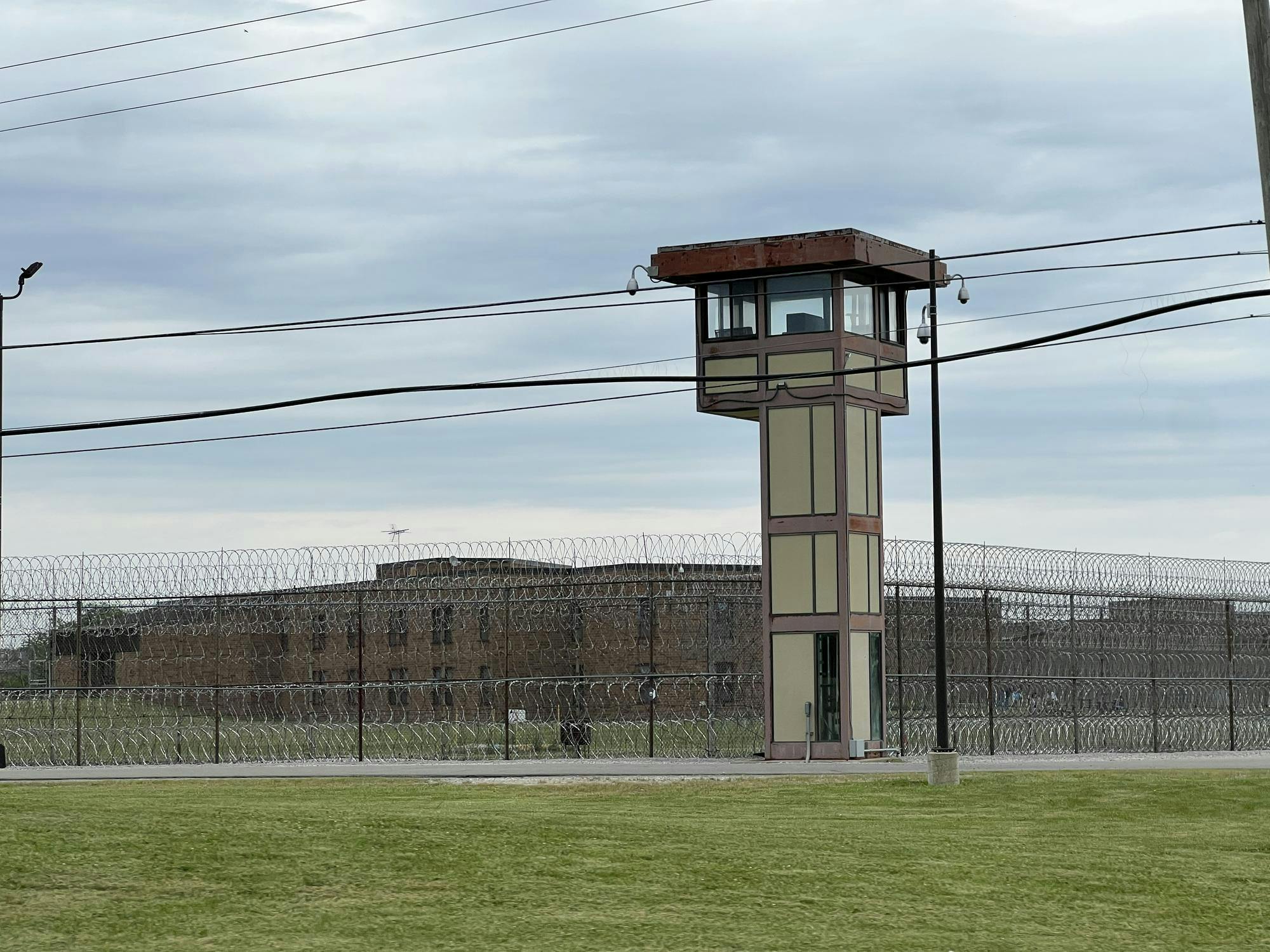
A prison watchtower at the Women's Huron Valley Correctional Facility on June 5, 2026.
Krystal Clark
Despite the corrections department reporting the absence of toxic mold, some inmates in the prison have raised other concerns about mold while in the facility, including Krystal Clark, an inmate who has received attention from activists, legislators and media due to the persistent presence of mold in her body. Clark, who has been incarcerated in WHV since 2011, tested positive in July 2023 for aspergillus niger complex, a type of mold. State Rep. Laurie Pohutsky shared an image during a Michigan House Committee on Oversight hearing in February 2026 which appears to show mold in Clark's left ear canal.
Clark said during a phone call with Prison Radio in August 2023 that the women's prison Warden Jeremy Howard had told her not to speak out about mold in the prison.
"He made me sit down, told me pretty much just shut up, there’s no mold in the facility," Clark said. "Two days later, I got my results. I have it in black and white. In my lungs, out my ears, I have it in black and white. I’m highly allergic to it. I should have never been housed in it."
The Centers for Disease Control and Prevention states on its website that exposure to mold can cause severe reactions in people who are allergic or who have asthma.
"Severe reactions, such as fever or shortness of breath, may occur among workers exposed to large amounts of molds in occupational settings, such as farmers working around moldy hay," the website states.
A 2020 MDOC medical report for Clark stated that she had raised concerns about symptoms like a worsening cough and difficulty breathing when exposed to what she reportedly described as mold in the shower.
Clark is one of the plaintiffs in an ongoing class action lawsuit against officials at the corrections department and women's prison that was filed in 2019 over the living conditions in the prison. The lawsuit alleges that insufficient ventilation and improper exposure to cleaning materials used by prisoners to clean the mold have caused and compounded health issues in several of the women housed in the facility.
Clark is one of 18 women who have gone on the record with Prison Radio to talk about their experience in the women's prison. Out of those women, nine raised concerns about mold, nine raised concerns about retaliation against speaking out, five raised concerns about food quality and 11 raised concerns about inadequate healthcare.
Corrections Department response
Some state and federal legislators have joined in the call for Michigan Department of Corrections Director Heidi Washington to resign. Washington did not respond to a request for comment, but a representative for the department of corrections said in the statement that Washington and other senior staff were overseeing the day-to-day operations at the women's prison to ensure proper medical treatment.
"Leadership has spoken to many incarcerated individuals about their care and are reviewing any concerns," stated the Corrections Department.
The Corrections Department statement also expressed that additional clinical leadership had been requested while evaluations were underway, and that a new healthcare staffing plan that would include enhanced nursing management was being developed.
"The department takes the safety and security of those under our supervision very seriously and has comprehensive processes and medical protocols for health emergencies," the statement read. "All incarcerated individuals are provided a consistent community standard of care which includes access to regular medical assessments, outside specialists, and emergency services."
Washington, who was originally appointed to the director position in 2015 by former Gov. Rick Snyder, was re-appointed in 2018 by Whitmer. Stacey LaRouche, Whitmer's press secretary, said that "the governor has directed corrections department to conduct a swift, thorough, and transparent investigation" which will include an assessment by an independent medical examiner and be released upon completion.
Dingell previously wrote to Whitmer Feb. 20, 2026, to call attention to a report from Disability Rights Michigan about access to healthcare, particularly in regards to wheelchair accessibility. That letter also raised concerns about mold in the women's prison.
In her new letter, Dingell requested that her questions be answered by June 19, 2026, though she did not specify in the letter what would happen if that deadline is not met.
"As long as these reports remain unavailable, questions will persist about the severity of the problems and whether they are being adequately addressed," Dingell wrote. "The women at Huron Valley, their families, staff, and the people of Michigan deserve access to the facts and the confidence that comes from an open and accountable process."
Editor's note: This story has been updated on June 13, 2026, to correct a misleading statement about the type of mold in Krystal Clark's body.