

Since the Iran war began in late February 2026, closures of the Strait of Hormuz have contributed to increased oil prices globally, including in Washtenaw County.
20% of the world’s oil runs through the Strait of Hormuz, a shipping corridor that connects the Persian Gulf to the Arabian Sea. As a result, Michigan, like states across the United States, have seen an uptick in gas prices. The average gas price in Michigan is currently $4.029; last year at this time it was $3.140.
While people who drive are seeing the prices rise, those who ride the bus might not see any changes to their transportation expenses.
Jeff Pfeifer, the manager of public affairs and community engagement for the Ann Arbor Transportation Authority, or TheRide, said there are currently no plans to raise fares. TheRide services the Ann Arbor and Ypsilanti area with over 100 buses and other service vehicles. Fare price depends on the type of ticket. A single ride for one person is $1.50, a day pass is $3 and a 30-day pass is $45. These prices are expected to remain the same. TheRide uses a competitive pricing model to get fuel, Pfeifer said. Every 10 days they send out a quote that allows them to get the best price at that moment and not be locked into one price, he said.
“By going out frequently we can kind of see what the price fluctuates to, sometimes it goes down, sometimes it goes up, but it allows us to get more of a fresh and competitive model,” Pfeifer said.
There’s also some concern with grocery prices going up; however, the Ypsilanti Food Co-op is doing its best to keep costs stable. Food prices don’t tend to go up like fuel prices until further down the road, said Corinne Sikorski, the general manager of the Co-op. The more immediate concern is a delivery fee: one of the Co-op's biggest distributors charges a higher fee when gas prices increase. Packaging material costs are also increasing because plastic containers are made with petroleum, Sikorski said. The prices at the Co-op are increasing slightly, but not drastically, and they’re currently just absorbing the fuel charges.
For the long-term problems, the production costs might start going up with time as the vendors have to pay more for gas, Sikorski said. The plan for that is to monitor the pattern and weigh out which items can handle a price bump and where they might need to lose a little margin to keep prices the same, Sikorski said. However, if labor goes up, prices will have to increase as well so the Co-op can pay the staff.
“We’ll watch for a trend and then start trying to see if we need to raise prices across the board,” Sikorski said.
Back in the 2008 Great Recession, when gas prices rose to $3.31, which would be around $5.11 today, the Co-op staff waited and eventually those prices went back down. They make sure they have the resources to wait it out by having reserves of money on hand, Sikorski said; they also try to be as efficient as possible, for example, not hiring any new staff when they’re trying to cover low margins.
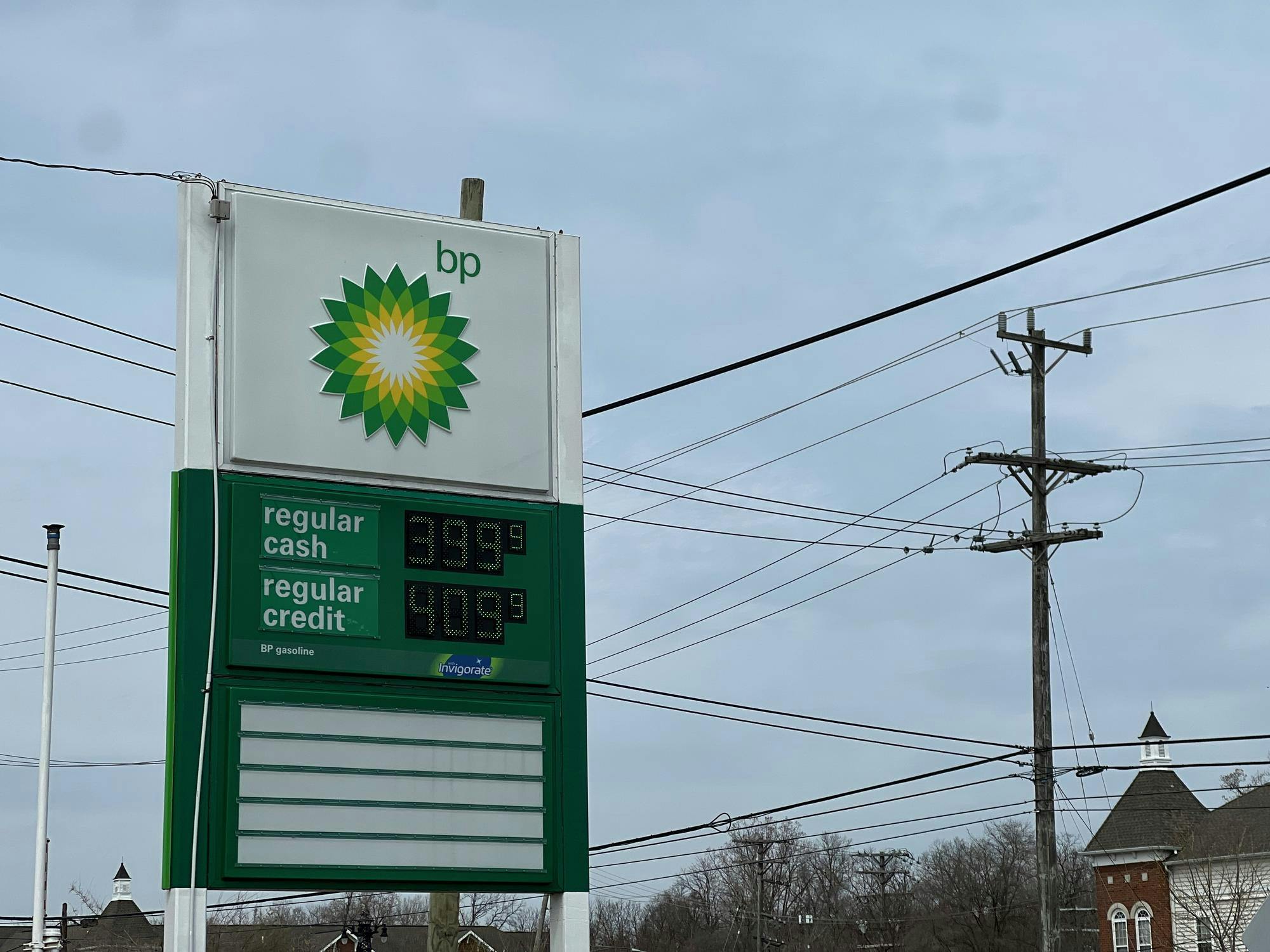
Gas prices at the bp station located at 819 N. Huron St., Ypsilanti on April 12, 2026.
Another effect of gas prices increasing is an increase in local customers. Sikorski said there seems to be an influx of customers who live in the area when fuel prices go up. People want to shop as close to home as possible to conserve gas or to be able to walk, Sikorski said.
“It’s most cost effective to just go to one place, if you can, to get the majority of your groceries,” Sikorski said.
Eastern Michigan University professor of economics Chris Elias said the future of gas prices depends on whether the Strait of Hormuz can open soon. Any further attacks on Iran’s energy infrastructure, such as processing plants, pipelines or transportation tankers could lead to a further increase in gas prices, Elias said.
However, it’s not just oil that travels through the strait. Much of the fertilizer that comes to the U.S. comes from the Persian Gulf. This time of year, many countries across the globe head into the growing season. If the farmers don’t have enough fertilizer, there could be food shortages later in the year, Elias said.
Looking towards the future, if the strait remains closed, the U.S. could be heading for a recession, Elias said.
“You know, if the price of oil spikes, 10, 20, 30 percent in the course of a few weeks, but then comes right back down to where it was previously, the impact might not be so bad, but if that price stays elevated for a significant amount of time, then you'll start to see significant impacts in the economy, which I would guess would spill over into unemployment,” Elias said.
Unfortunately, there’s not much for civilians to do at the moment but to wait, Elias said. However, one thing that everyone can do at this time is contact their elected officials and express their feelings about the Iran war, Elias said. He encouraged concerned residents who are feeling negative effects of the war to talk to their congressperson.
“We should hold our elected leaders accountable for that," Elias said.


